



Plans for Barkham Solar Farm, one of Wokingham Borough Council’s flagship climate projects, have been paused following government-led changes to how renewable energy schemes connect to the national electricity grid.
The council confirmed that construction, which had been due to start in spring 2026, is now on hold after reforms altered the timetable for when locally generated electricity can be connected and exported. While the project still has planning permission and funding in place, the lack of certainty over grid access has made it too risky to proceed at this stage .
What is Barkham Solar Farm?
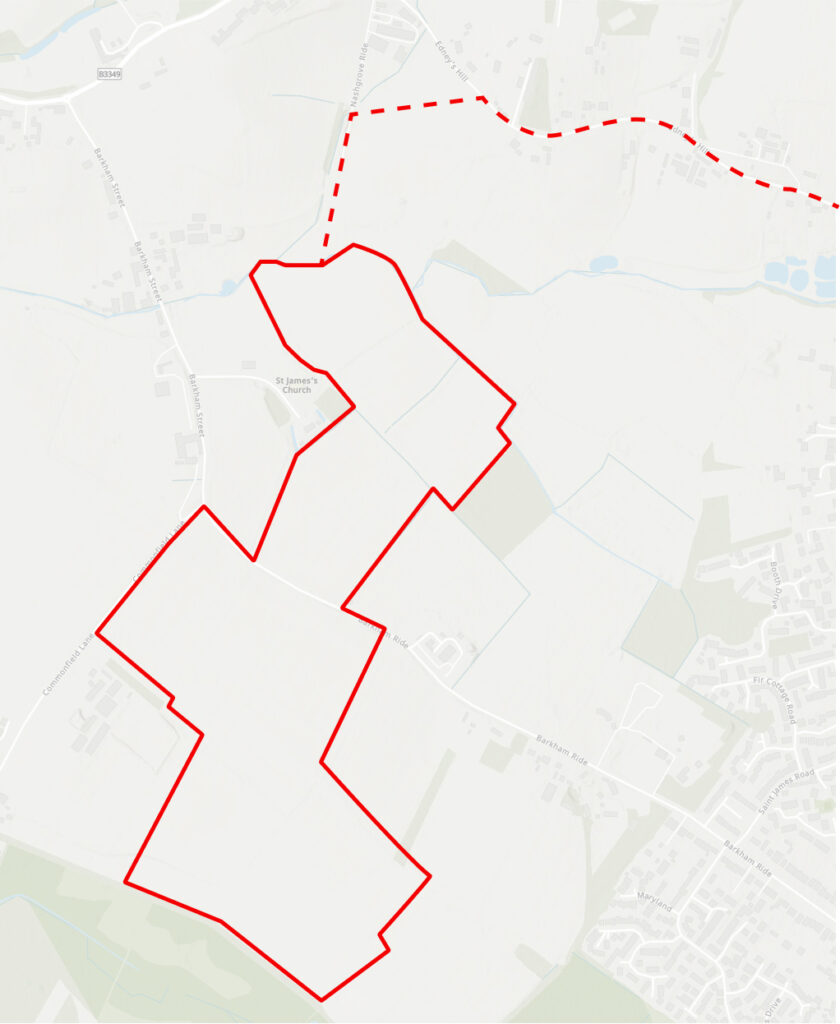
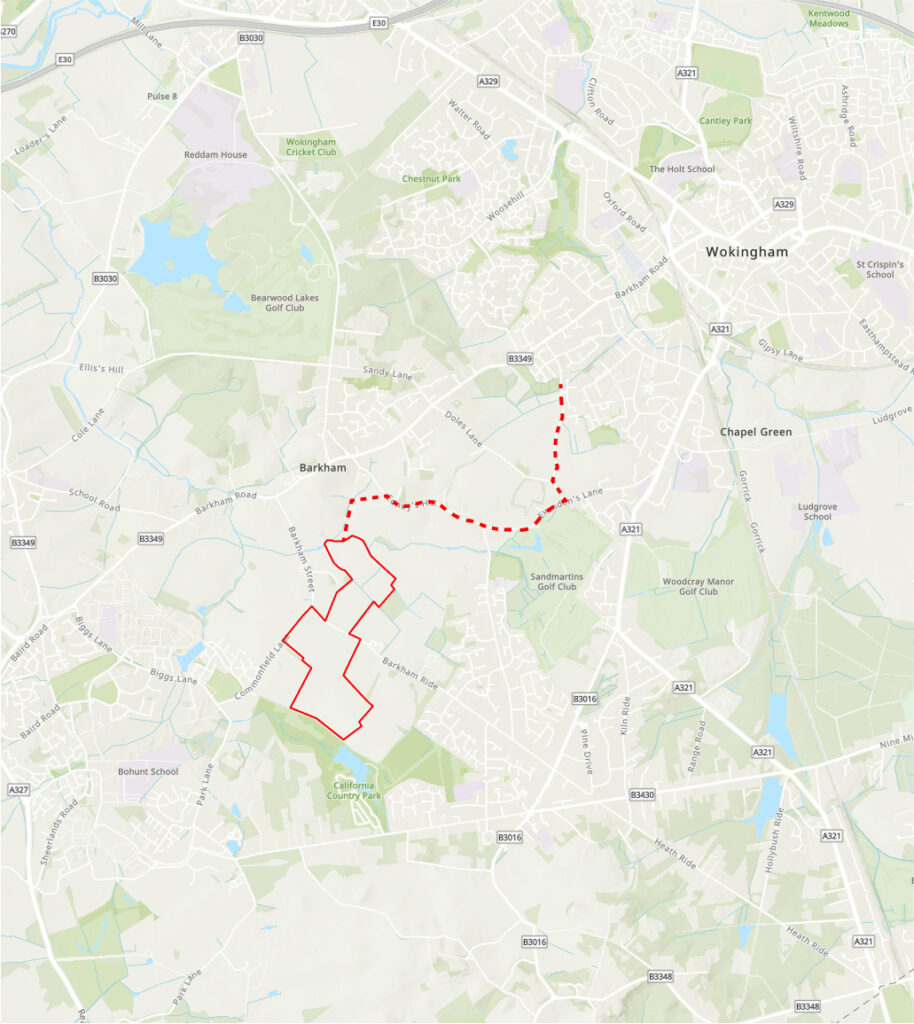
Barkham Solar Farm is a council-owned renewable energy project planned for land near Barkham, designed to generate clean electricity and feed it back into the national grid. It forms a key part of Wokingham Borough Council’s Climate Emergency Action Plan, which aims to make the borough carbon neutral while also generating income to support local services.
According to the council, the scheme would:
- Generate renewable electricity locally
- Reduce carbon emissions
- Contribute to national energy security
- Provide a long-term income stream for the council
More details about the project can be found on the council’s website:
👉 https://www.wokingham.gov.uk/climate-emergency/barkham-solar-farm-project
Why has the project been delayed?
The delay is not due to planning objections or local opposition, but to changes in national policy governing how renewable energy projects connect to the electricity grid.
Under the original arrangements, Barkham Solar Farm had:
- An initial grid connection scheduled for 2027
- A full connection planned for 2028
Following the reforms, while the initial 2027 connection remains in place, the full connection has been pushed back to an uncertain window between 2031 and 2035 .
This uncertainty affects how much electricity the solar farm could export — and therefore how much income it could generate — making it financially irresponsible for the council to sign multi-million-pound construction contracts at this time.
A national issue affecting local projects
The government has said the reforms are intended to improve the electricity connection system and prioritise projects that are ready to deliver clean energy quickly. However, councils across the country have raised concerns that the changes risk stalling shovel-ready renewable projects.
In Barkham’s case, the project was already fully developed, funded, and ready to move into construction before the connection rules changed.
Senior council leaders, including the chief executive, council leader and executive members, have written to the organisations responsible for grid connections and met with network operators to challenge the changes and seek clarity .
The council is also working with industry partners to demonstrate the wider national impact of the reforms and argue for a review.
Council response: “This delay is not of our making”
Cllr Katrin Harding, executive member for environment and climate emergency, said the delay was deeply frustrating given how advanced the project already was.
“This delay is not of the council’s making. Barkham Solar Farm was ready to proceed, with planning, funding in place and a clear delivery programme based on connection dates that had already been agreed,” she said .
She acknowledged that reforms to the electricity system are needed but said locally owned schemes like Barkham should not be disadvantaged.
“It is particularly disappointing that a locally owned project like Barkham, which is ready to start construction, has been delayed — especially when more solar power is needed before 2030 and this scheme could help deliver it,” she added .
Why Barkham Solar Farm matters to Wokingham
Beyond its environmental benefits, Barkham Solar Farm is expected to play an important financial role for the borough.
Council forecasts show the scheme could generate significant net income, helping to fund local services at a time when councils nationwide are under increasing financial pressure .
This model — where councils invest in renewable energy and use the returns to support services — has been adopted by local authorities across the UK as a way to:
- Reduce reliance on central government funding
- Offset rising energy costs
- Reinvest profits into communities
For Wokingham, the project represents both a climate commitment and a long-term financial asset.
What happens next?
Despite the delay, the council says it remains fully committed to Barkham Solar Farm and confident it will eventually go ahead.
Work continues behind the scenes to:
- Press for the original grid connection dates to be reinstated
- Gain clarity on export capacity
- Explore whether the reforms can be adjusted to protect ready-to-build projects
Until there is greater certainty, construction will remain paused.
“While this creates uncertainty in the short term, we remain fully committed to the project and are confident it will be a strong and valuable asset for the borough once it moves forward,” Cllr Harding said .
A wider question for the future of clean energy
The situation at Barkham raises wider questions about how quickly the UK can deliver new renewable energy — particularly when local authorities are ready to act but are constrained by national systems.
With the government committed to expanding renewable generation before 2030, councils like Wokingham argue that locally owned, fully planned projects should be prioritised, not delayed.
For now, residents will have to wait longer to see Barkham Solar Farm move from plans to reality — but the council insists it is a delay, not a cancellation.







I strongly object to this misleading political rhetoric from our Borough Council.
Claims such as “Government-led reforms delay local solar farm” and “The Government has changed its timetable for renewable schemes” are inaccurate. The revised grid-connection timetable followed a strategic review by NESO — an independent public body responsible for planning Great Britain’s electricity and gas networks. This was not a political decision by Government, but a national supply-and-demand assessment which concluded that there is no local need for additional generation until at least 2031.
WBC has already spent millions on this project since its approval in 2021, with no realistic prospect of a return before 2031. At the same time, its own planning policies do not call on developers to install solar panels or heat pumps on new developments — measures that would deliver similar environmental benefits with far lower risk, cost and ongoing management.
Residents did not ask for speculative investments. We asked for the delivery of core services, financial discipline and sensible priorities. This is not an ideological argument; it is about stewardship of public money. The project should now be subject to an independent review to determine whether the proposed £35.2m of borrowing and expenditure in 2026 and the forecast income genuinely represents value for money in a Council who are claiming financial difficulties.