



This is my Deep Dive into Evidence, Local Schemes, and the E.ON “Home Age” Campaign!
As energy bills continue to bite and the UK pushes towards cleaner energy, many homeowners are asking a big question: can storing electricity in a home battery actually save me money? The simple answer is yes — in many cases, they can deliver significant savings — but the exact numbers depend on your home, how you use energy, and which technologies and tariffs you pair with a battery.
In this article we’ll explore what home batteries do, what research and industry pilots show about savings, E.ON’s battery campaign and findings, local Berkshire schemes, national policy context, and whether batteries are worth it for you.
What Is a Home Battery, and Why Do People Want One?
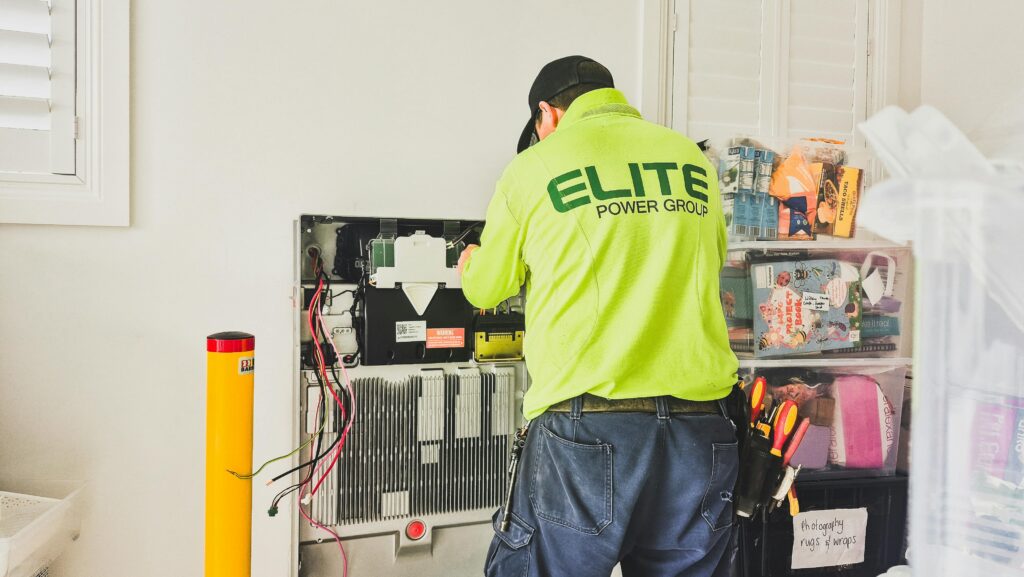
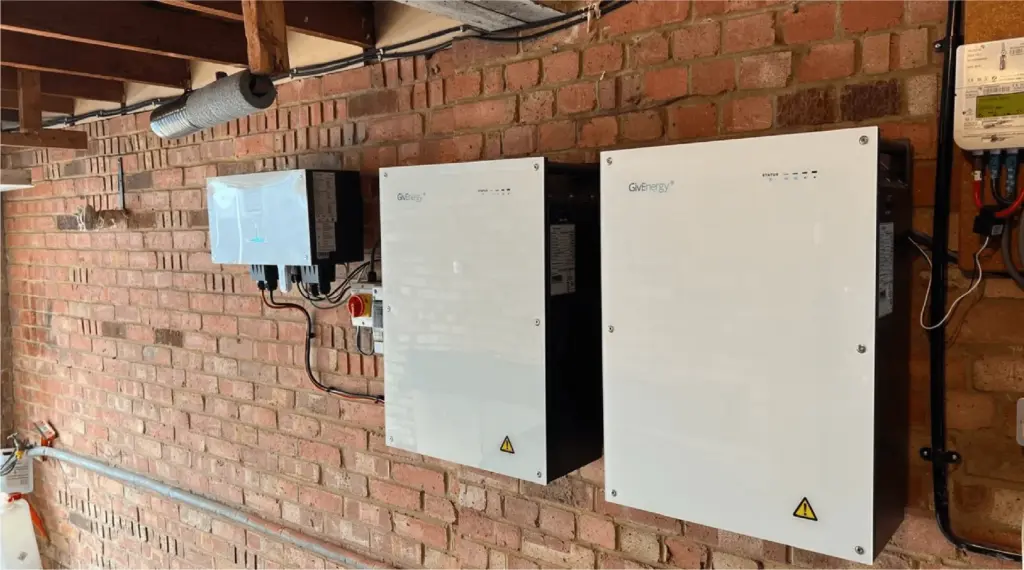
A home battery is a storage device (often lithium-ion) that allows you to save electricity — typically from solar panels or cheap off-peak tariffs — and use it later, such as during evening hours when grid electricity is expensive. Batteries help households:
- Increase self-consumption of cheap or free solar energy
- Reduce reliance on expensive grid power
- Shift electricity use to low-cost times using tariff signals
The financial case for batteries is strongest when paired with either solar PV (to capture free daytime energy) or time-of-use (ToU) tariffs where electricity prices vary throughout the day.
How much can a home storage battery run in winter? Our real life examples.
What Research and Pilots Say About Savings
Recent research and industry pilots show that home batteries can deliver real bill savings for UK households:
National Findings — E.ON’s “Home Age” Report
E.ON Next’s The Home Age report, based on a pilot project in Coventry, reveals striking figures:
- Average savings of about £255 per year per household from using a home battery combined with a ToU tariff.
- Larger families could see around £415 a year reduced from bills.
- Households with high energy needs (such as those with medical equipment) could save an estimated £600 or more annually.
- If rolled out across the UK, the report suggests a total of £5.45 billion per year in energy bill savings on a national scale. (E.ON News)
These figures come from real data where households had battery storage, often alongside solar and smart tariff switching, demonstrating the practical potential of storage technology when combined with intelligent usage patterns. (E.ON News)
Download the-home-age-report-2025 pdf
Energy Efficiency and Solar Context
Other industry data underline the broader benefit of batteries:
- Batteries can dramatically increase self-consumption of solar energy, meaning you use more of your own generated power instead of buying it from the grid. (Solar Together)
- UK schemes like Solar Together report that pairing solar PV and battery storage helps households use more of their own renewable energy and cut bills further than solar alone. (Solar Together)
Why Batteries Are Financially Attractive Now
Several market and policy trends are improving the value proposition for batteries:
0% VAT on Home Battery Storage
The UK government extended 0% VAT to domestic battery systems, including retrofitted units, making the upfront cost significantly lower for homeowners. (Solar Energy UK)
This change alone can bring down the installation cost by hundreds or even over a thousand pounds, helping homeowners reach payback faster.
Smart Time-of-Use Tariffs
Batteries are most effective when used with variable pricing. Charging a battery at low-cost times (e.g., night or mid-day solar) and discharging when prices are high can deliver ongoing savings — even when solar production is lower in winter. (Solar Together)
E.ON’s “Home Age” Campaign — A National Push for Batter-Powered Savings
E.ON Next’s Home Age campaign has brought batteries into the national spotlight. This initiative, rooted in real pilot data, argues that widespread battery adoption could:
✔ Help households cut bills now
✔ Reduce fuel poverty by targeting low-income homes
✔ Boost the national economy by increasing spending power
✔ Create thousands of new jobs in the energy sector
In E.ON’s Coventry pilot, households with batteries and smart tariffs saw bill savings from £255 to over £600 per year depending on energy use patterns and household size, highlighting the real-world potential of storage adoption. (E.ON News)
E.ON has also called for government support to expand battery rollout to 250,000 fuel-poor households, backed by an estimated £600 million in investment — a sign that batteries are not only a private investment tool but could also become a public policy lever for cost reduction. (E.ON News)
Batteries and Local Schemes in Berkshire
If you live in Berkshire, you’re in luck — several local initiatives make solar and battery adoption more accessible:
Solar Together Berkshire
A group-buying scheme across councils in the Berkshire area enables homeowners and small businesses to get solar PV and battery storage at competitive prices through pre-vetted installers. (West Berkshire Council)
- The scheme simplifies the process with an auction of installers, a personal system recommendation, and support at every step. (https://www.reading.gov.uk)
- It’s designed to reduce electricity costs, cut carbon emissions, and improve energy security for local residents. (West Berkshire Council)
Wokingham Borough Council
Save on energy bills with Solar Together Berkshire. Join more than 500 Wokingham Borough residents generating renewable energy through solar panel scheme Solar Together Scheme
Bracknell Forest Solar Together
Bracknell Forest council is also running Solar Together in partnership with the wider Berkshire scheme, offering residents a way to add battery storage to existing solar systems to maximise savings. (bracknell-forest.gov.uk)
These kinds of schemes lower the barrier to entry by reducing installation costs and ensuring high-quality workmanship — a win-win for homeowners seeking bill reductions now.
Government Policy and the Future of Batteries in the UK
Batteries are gaining political attention, though not without controversy:
Future Homes Standard Debate
Recent news suggests the UK government may remove mandatory battery storage from new homes’ green tech requirements, a potential setback for wider adoption and long-term savings. Critics argue this could slow bill-cutting benefits and undermine efficiency gains. (The Guardian)
National Initiatives on Renewable Tech
At the same time, national plans aimed at mass solar deployment could indirectly boost battery savings. Government analysis suggests solar alone could save householders roughly £500 a year on energy bills, and pairing solar with storage amplifies this effect. (GOV.UK)
Are Batteries Worth It for You?
The bottom line: home batteries can be a smart investment — but they are not a universal “guaranteed fortune-saver.”
When Batteries Work Best
Batteries make the most financial sense if you:
- Have or plan to install solar panels
- Are on a ToU or smart tariff
- Use a lot of electricity in the evenings
- Live in a home with suitable roof space and energy needs
In these cases, hundreds of pounds in annual savings are realistic, and some homes may even edge close to zero-bill scenarios when combining storage with solar and other efficiency measures — a trend gaining traction nationwide. (E.ON News)
When Batteries May Be Less Impactful
Batteries may be less cost-effective if:
- You rarely use electricity during peak periods
- You have low overall consumption
- Installation costs or financing terms are high
- You aren’t on a tariff that rewards storage usage
Conclusion: A Smart Move — but With Nuance
Home batteries are emerging as a practical tool to cut energy costs, especially when paired with solar and smart tariffs.
Projects like E.ON’s Home Age demonstrate that typical households can save £255–£600 a year, and national rollouts could save the country billions annually. (E.ON News)
Local initiatives in Berkshire, such as Solar Together, are helping residents capture these benefits at lower upfront costs. (West Berkshire Council)
While government policy continues to evolve, the combination of technology, smart tariffs, and supportive schemes makes now a compelling time to explore home battery storage — not just for climate reasons, but for real, measurable savings on household bills.
Frequently Asked Questions (FAQs)
Can I buy a home battery without having solar panels?
Yes — you can install a home battery without solar panels, and for some households it still makes financial sense.
A battery without solar works by charging from the grid when electricity is cheapest, usually overnight on a time-of-use tariff, and then supplying your home with that stored electricity during peak times when prices are higher.
This setup can be particularly useful if you:
- Are on a cheap overnight or smart tariff
- Use a lot of electricity in the evenings
- Want some protection against future price rises
- Are planning to add solar panels later
However, it’s important to be realistic:
👉 Batteries deliver the biggest savings when combined with solar panels, because solar gives you “free” electricity to store. Without solar, savings depend entirely on the price difference between cheap and peak electricity.
The good news is that:
- Batteries can be retrofitted later if you add solar in future
- Home batteries currently qualify for 0% VAT, even when installed without solar
If you’re unsure, a reputable installer can model your expected savings based on your actual electricity usage.
How does home battery installation work?
Home battery installation in the UK is usually straightforward and typically completed within one day.
Here’s how the process works:
1. Initial assessment
An installer will:
- Review your electricity usage
- Check whether you already have solar (or plan to install it)
- Assess your existing consumer unit and inverter
- Recommend the right battery size (usually 5–15 kWh for homes)
This is often done remotely first, followed by a site visit if needed.
2. Choosing the battery system
You’ll be advised on:
- Battery capacity (how much electricity it can store)
- Whether you need a hybrid inverter or can use your existing one
- Optional features such as backup power or smart energy controls
Most modern batteries are wall-mounted and about the size of a slim cupboard.
3. Installation day
On the day, installers will:
- Mount the battery (usually in a garage, utility room, or loft)
- Connect it to your electrical system and inverter
- Configure monitoring software or an app
- Test the system thoroughly
Power may be switched off briefly during the work.
4. Commissioning and handover
Once installed, you’ll be shown:
- How to monitor usage and savings via an app
- How the battery charges and discharges
- How to make the most of time-of-use tariffs
You’ll also receive:
- Electrical safety certificates
- Warranty details (often 10 years)
- MCS paperwork (important for solar and export tariffs)
Do I need planning permission for a home battery?
In most cases, no planning permission is required for a home battery installation, as they fall under permitted development.
Exceptions may apply if:
- You live in a listed building
- You’re in a conservation area and the battery is externally visible
Your installer should advise you if any permissions are needed.
How long do home batteries last?
Most modern lithium-ion home batteries:
- Come with 10-year warranties
- Are designed for 6,000–10,000 charge cycles
- Retain around 60–80% capacity at the end of warranty life
With sensible use, many batteries are expected to last 10–15 years or more.
Is a home battery safe?
Yes — modern home batteries are designed with multiple safety systems, including:
- Thermal management
- Automatic shutdown protections
- Fire-resistant casings
UK installations must comply with strict electrical and building regulations, and installations should always be carried out by qualified, certified installers.
Is a home battery worth it in Berkshire?
For many Berkshire households, the answer is increasingly yes — especially if you:
- Have or plan to install solar panels
- Can access group-buying schemes like Solar Together Berkshire
- Use smart or off-peak electricity tariffs
- Want to reduce exposure to future energy price rises
Local council-backed schemes and national initiatives (such as E.ON’s battery pilots) suggest that hundreds of pounds per year in savings are realistic for many homes when batteries are used correctly.