

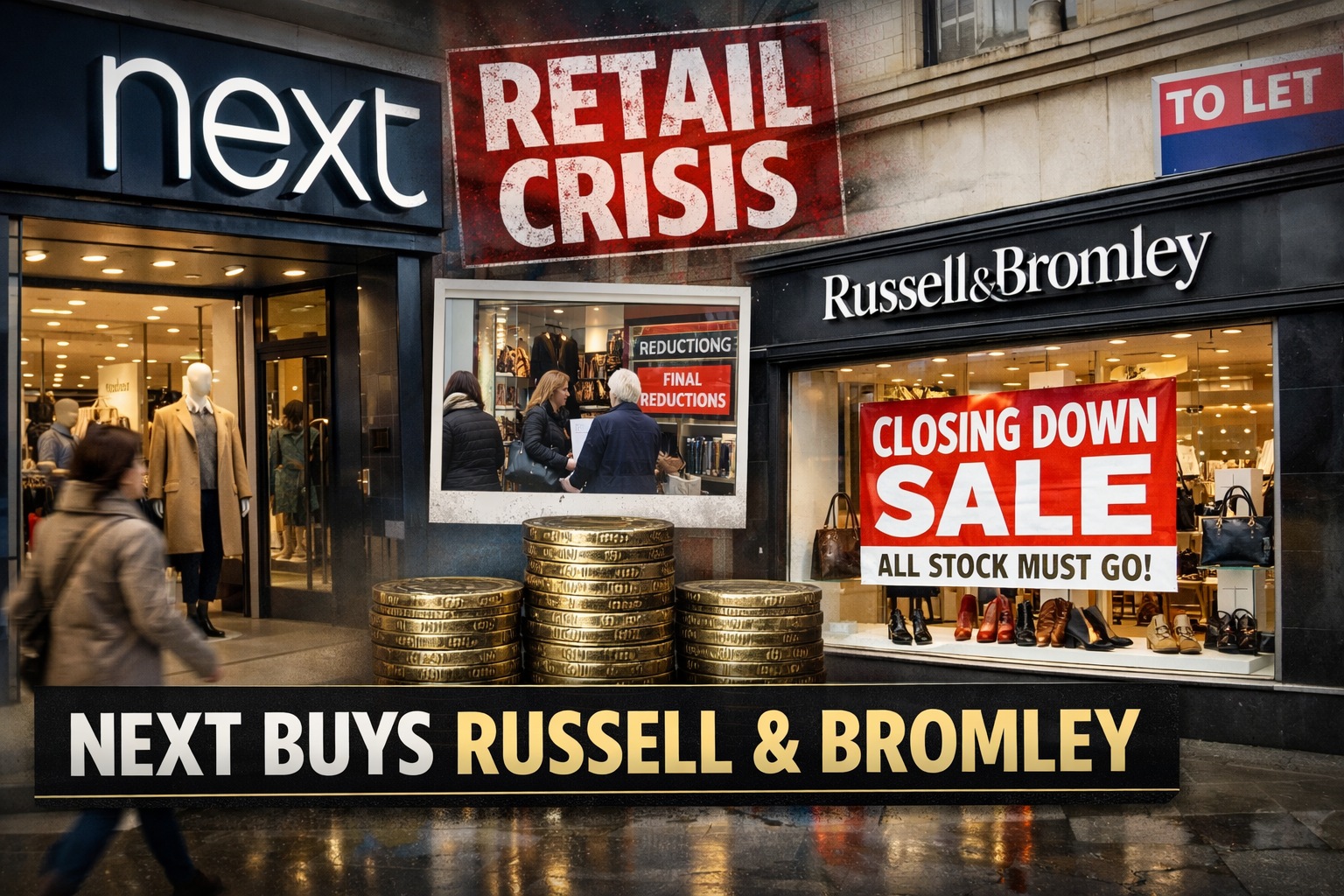
High-street giant Next plc has struck a high-profile deal to acquire the iconic British footwear brand Russell & Bromley, in a move that both preserves a heritage name and underscores the ongoing turmoil in the UK retail sector. (Retail Gazette)
Next confirmed it is purchasing the Russell & Bromley brand and intellectual property for £2.5 million, with an additional £1.3 million committed to existing stock under a pre-pack administration agreement approved by the High Court. As part of the deal, Next will retain just three of the brand’s 36 shops — in Chelsea, Mayfair and at the Bluewater Shopping Centre — while the remaining 33 stores and nine concessions continue to trade under administrators as their future is evaluated.
The historic footwear retailer, established more than 140 years ago, has struggled with falling demand and rising costs, with administrators stepping in after the family-owned business failed to secure sufficient funding. The sale preserves the Russell & Bromley name — beloved by many British shoppers — but casts doubt over the future viability of its wider store estate.
Industry analysts say the deal reflects broader high-street pressures, as legacy brands grapple with changing consumer habits and increased online competition. For Next, the acquisition is the latest in a series of strategic moves to bolster its portfolio, following earlier purchases of Cath Kidston, Joules and FatFace.
While Next’s takeover secures the immediate future of the brand’s core identity, there are concerns over potential job losses at the excluded locations, with approximately 400 employees now facing an uncertain outlook. Representatives from Next and administrators have said they are exploring options for those stores, but no definitive plan has been announced.
Why Britain’s High Streets Are Struggling
The takeover of Russell & Bromley by Next is the latest example of the deep-rooted challenges facing Britain’s high streets, where long-established retailers are under increasing pressure from rising costs and changing consumer behaviour.
Retailers have been hit by a combination of higher rents, rising business rates, increased energy bills and wage costs, all while consumer spending remains fragile amid ongoing cost-of-living pressures. Many households are cutting back on discretionary purchases such as fashion and footwear, opting instead for cheaper online alternatives or delaying spending altogether.
At the same time, the shift to online shopping has permanently altered how people use town and city centres. Footfall has failed to recover to pre-pandemic levels in many areas, leaving traditional bricks-and-mortar stores struggling to justify large physical estates. Even well-known brands with loyal customer bases have found it difficult to adapt quickly enough.
Industry experts also point to structural problems that pre-date the pandemic. Long leases agreed during more prosperous times, inflexible rent agreements and a tax system that disproportionately affects physical stores have left many retailers exposed. While online-only competitors avoid these costs, high-street brands often carry significant overheads that make survival increasingly difficult.
As a result, administrations, pre-pack sales and partial rescues — such as Next’s acquisition of Russell & Bromley’s brand rather than its full store network — have become more common. Larger retail groups with strong balance sheets are selectively buying heritage names, while shrinking physical footprints to focus on profitable locations and digital sales.
The decline of traditional high-street retail has broader implications beyond shopping. Store closures often lead to job losses, reduced local footfall and empty units, which can accelerate decline in town centres and impact nearby hospitality and service businesses.
Despite government efforts to revitalise high streets through regeneration funding and business-rate relief, many analysts warn that without deeper reform, more household-name retailers could disappear from Britain’s shopping streets in the years ahead.