



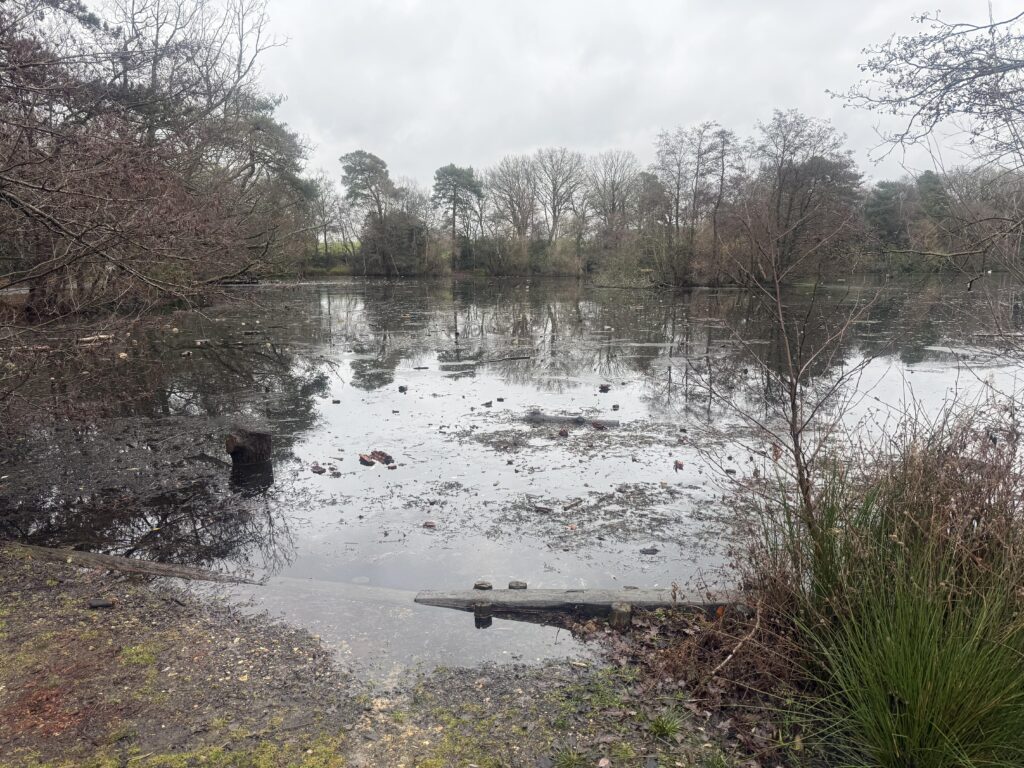
Wokingham Borough Council has issued a clear warning to park users not to throw logs or debris onto frozen lakes, after council countryside staff were seen retrieving branches and timber from the ice at California Country Park in Finchampstead. I took a walk down to the lake and could see a fence post with rusty nails thrown into the lake and lots of debris. Is this naturally occurring or is it irresponsible people throwing debris onto the frozen lake?
A sign displayed by the Council’s Countryside Service states: “DO NOT THROW LOGS or DEBRIS ON TO THE ICE – it is dangerous and can lead to ecological issues. Thank you for your cooperation.” The notice also provides a contact number for the service: 0118 934 2016.
During a visit to the park today, large numbers of logs and branches could be seen scattered across the frozen surface of the lake. While some of this debris is likely to be the result of natural processes – such as strong winds, fallen trees, or branches pushed onto the ice as water levels change and freeze – council staff were also responding to concerns that some material may have been deliberately thrown onto the ice by visitors.
A serious safety risk
Frozen lakes can appear deceptively solid, particularly during cold spells. However, ice thickness is rarely consistent, and even a small increase in weight or disturbance can cause it to crack or collapse.
Throwing logs, sticks or other objects onto ice can create a false impression that the surface is safe. This can encourage children, dog walkers, or other visitors to venture onto the ice to retrieve items, significantly increasing the risk of falling through into freezing water.
Emergency services consistently warn that cold water shock can incapacitate a person within seconds, and rescue attempts by untrained members of the public often put additional lives at risk. For this reason, councils strongly discourage any activity that might tempt people or animals onto frozen lakes.
Ecological consequences
Beyond the immediate danger to people, throwing debris onto frozen lakes can also have damaging environmental effects.
When ice melts, logs and branches can sink or become lodged in sensitive areas of the lakebed. This can disrupt aquatic habitats, damage plants, and affect water quality. In managed park lakes, excess debris can interfere with oxygen levels in the water, which is vital for fish and other wildlife.
There is also the risk that non-natural materials – such as treated wood, garden waste, or litter mixed in with branches – introduce pollutants into the ecosystem. Even seemingly harmless materials can upset the delicate balance of a managed lake environment.
Council action at California Country Park
Council countryside staff were seen actively retrieving debris from the lake at California Country Park, highlighting the ongoing work required to keep public spaces safe and environmentally healthy.
Removing material from frozen or partially frozen water is a challenging and potentially hazardous task, requiring trained staff and appropriate equipment. The Council has urged visitors to help reduce these risks by acting responsibly and leaving fallen branches and logs where they are.
A shared responsibility
The Council’s message is clear: while nature will always play a role in how parks and lakes change over time, deliberately adding debris to frozen water creates avoidable risks for people, wildlife, and council staff alike.
Visitors are reminded to:
- Stay well clear of frozen lakes and ponds
- Keep dogs on leads near water during cold weather
- Avoid throwing any objects onto ice
- Report concerns to the Countryside Service on 0118 934 2016
As winter conditions continue, the Council is asking for cooperation from all park users to help keep Wokingham’s green spaces safe, accessible, and protected for both people and wildlife.