


As temperatures drop and weather conditions worsen across the UK, preparing your car for autumn and winter becomes essential for safe driving and avoiding breakdowns. A properly winterised vehicle needs attention to several key areas: tyres, fluids, battery, visibility systems, and emergency equipment. Starting preparations in early autumn ensures your car remains reliable throughout the colder months, preventing costly repairs and dangerous situations on wet or icy roads.
The most critical winter preparation steps include checking tyre condition and pressure, testing your battery, topping up antifreeze and screen wash, ensuring lights work properly, and keeping emergency supplies in your boot. These basic maintenance tasks can prevent the majority of cold-weather breakdowns that leave many drivers stranded during the winter months.
Essential tyre checks for winter safety
Winter driving demands proper tyre care, as cold temperatures affect tyre pressure and road grip becomes crucial on wet or icy surfaces. Check your tyre tread depth regularly – while the legal minimum in the UK is 1.6mm, many motoring experts recommend at least 3mm for winter conditions. Cold weather causes tyre pressure to drop, so check and adjust pressures weekly during autumn and winter, following your vehicle manufacturer’s recommendations found in your owner’s manual or door frame sticker.
Consider switching to winter tyres if you regularly drive in harsh conditions. These specialised tyres use softer rubber compounds that remain flexible below 7°C, providing better grip on cold, wet roads. All-season tyres offer a practical compromise for UK drivers who experience variable winter weather.
Battery and electrical system maintenance
Cold weather puts extra strain on car batteries, with many vehicles experiencing starting problems during the winter months. Have your battery tested at a garage or using a home battery tester, especially if it’s over three years old. Clean any corrosion from battery terminals using a wire brush and apply petroleum jelly to prevent future buildup.
Check all lights function correctly, including headlights, brake lights, indicators, and fog lights. How to remove moisture from car headlights without opening them? Here are some tips on how to get condensation out of headlights without having to dismantle them. First, leave your headlights on for 20-30 minutes while parked in a dry area – the heat will naturally evaporate moisture. This simple technique helps maintain clear visibility without expensive repairs.
Winter preparation timeline
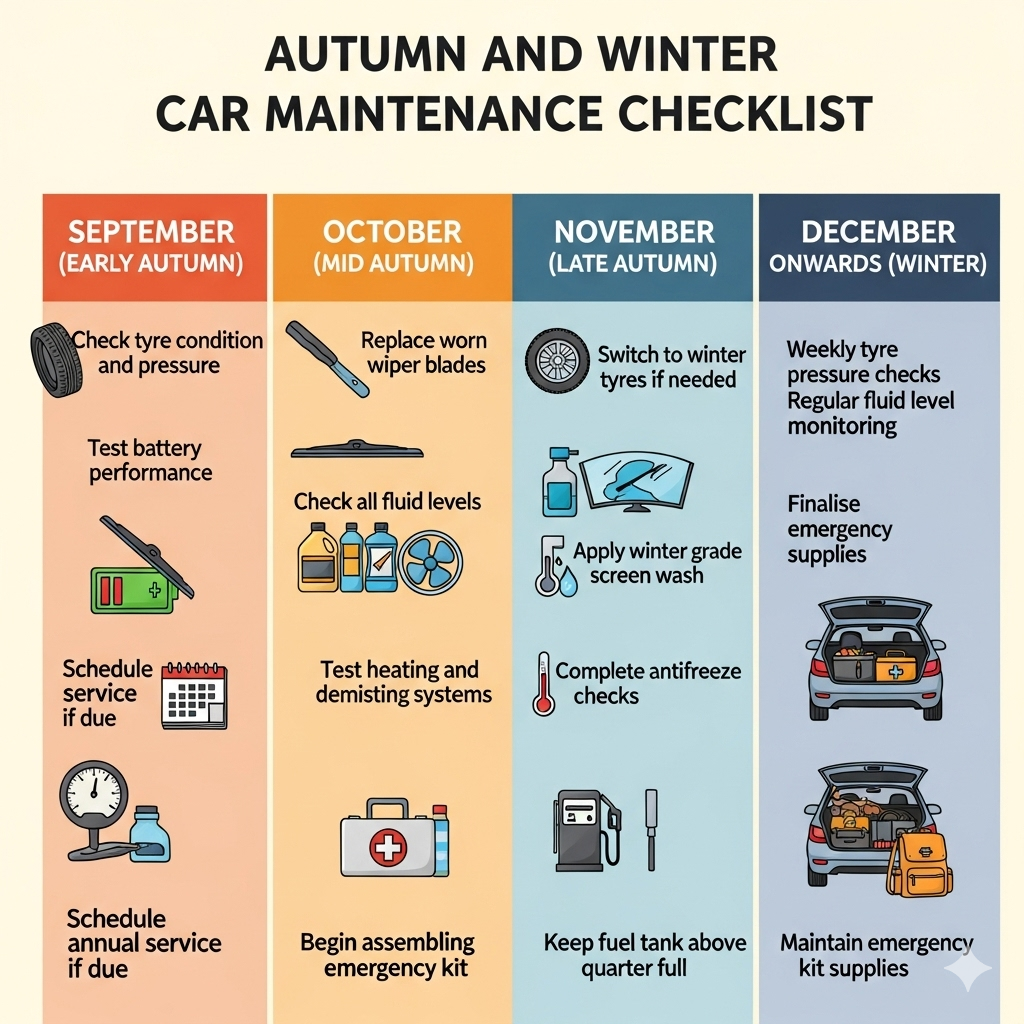
This timeline demonstrates the progressive approach to winter preparation, starting with basic checks in September and building towards comprehensive readiness by November. The schedule allows drivers to spread costs and effort over several weeks, avoiding last-minute rushes when winter weather arrives. Following this structured approach ensures no critical maintenance tasks are overlooked, with the most time-sensitive preparations like tyre changes completed before temperatures consistently drop below 7°C.
Fluid levels and antifreeze protection
Antifreeze prevents your engine coolant from freezing and causing serious damage. Check the coolant level when the engine is cold and top up if necessary with the correct mixture – typically a 50/50 blend of antifreeze and water provides protection down to approximately -35°C. Many garages offer free antifreeze testing to ensure adequate protection.
Essential winter fluid requirements
| Fluid Type | Recommended Grade | Protection Level | Check Frequency | Top-up Cost (Approximate) |
| Engine Oil | Check manual for winter viscosity | Maintains flow in cold | Monthly | £15-40 per litre |
| Antifreeze | 50/50 mix with water | Down to -35°C | Fortnightly | £10-20 per litre |
| Screen Wash | Winter concentrate | Down to -20°C | Weekly | £5-15 per 5 litres |
| Brake Fluid | DOT 4 or DOT 5.1 | Moisture resistance | Every 2 years | £8-15 per litre |
| Power Steering | As specified | Cold flow protection | Every 3 months | £10-25 per litre |
The table above highlights the critical importance of maintaining proper fluid levels throughout winter. Screen wash requires the most frequent checking at weekly intervals, as winter driving conditions lead to heavy usage from road spray and salt. The protection level of -20°C for screen wash proves adequate for most UK winter conditions, while the -35°C protection from properly mixed antifreeze provides a substantial safety margin. These top-up costs, ranging from £5 for screen wash to £40 for premium engine oil, represent minor investments compared to potential engine damage from inadequate winter protection.
Visibility and safety equipment essentials
Replace worn wiper blades before winter arrives, as effective wipers are essential for clearing rain, snow, and road spray. Keep your windscreen clean inside and out to reduce fogging and improve visibility. A demisting pad or microfibre cloth stored in your glove box helps clear condensation quickly.
Pack an emergency kit including: ice scraper and de-icer, torch with spare batteries, warm clothes and blanket, first aid kit, warning triangle, jump leads, phone charger, snacks and water, and a small shovel. These items prove invaluable if you experience a breakdown or get stuck in severe weather.
Additional winter preparation tips
Service your car according to manufacturer schedules, as regular maintenance becomes even more important during challenging weather conditions. Check your suspension system before winter – onlinecarparts.co.uk recommends changing the shock absorbers if you notice uneven tyre wear, excessive bouncing after hitting bumps, or if your vehicle has covered more than 50,000 miles. Worn shock absorbers significantly reduce vehicle stability on slippery winter roads, making this check particularly important for safe cold-weather driving.
Keep your fuel tank at least a quarter full to prevent fuel line freeze-up and ensure you can run the heater if stuck in traffic. Plan journeys carefully, allowing extra time and checking weather forecasts before travelling. Remember that winter conditions affect all vehicle systems, from braking distances to suspension performance.
Preparing your vehicle for autumn and winter takes modest effort but provides significant benefits in safety, reliability, and peace of mind. Start preparations early to avoid the rush when cold weather arrives, ensuring your car remains dependable throughout the challenging months ahead.
Sources
- AUTODOC UK – Vehicle maintenance and repair guidance
- UK Government MOT testing standards and requirements
- RAC and AA breakdown statistics and winter driving advice
- British Tyre Manufacturers’ Association safety recommendations
Frequently Asked Questions
When should I start preparing my car for winter?
Begin winter preparations in early September to spread costs and avoid last-minute rushes. Start with basic checks like tyre condition and battery testing, then progressively complete more involved tasks through October and November. This timeline ensures your vehicle is fully prepared before the first frost or severe weather arrives, typically by late November in most UK regions.
What is the minimum safe tyre tread depth for winter driving?
While the UK legal minimum tread depth is 1.6mm year-round, motoring safety experts strongly recommend maintaining at least 3mm tread depth for winter conditions. This extra depth provides significantly better grip on wet and icy roads, as the deeper grooves can disperse more water and slush. Winter tyres or all-season tyres with adequate tread become especially important when temperatures drop below 7°C.
How often should I check my antifreeze protection level?
Check antifreeze levels fortnightly during autumn and winter months, always when the engine is cold to avoid injury. A properly mixed 50/50 blend of antifreeze and water provides protection down to approximately -35°C, well below typical UK winter temperatures. Many garages offer free antifreeze testing, which you should take advantage of at the start of autumn to ensure adequate protection throughout winter.
What essential items should I keep in my winter emergency kit?
Your winter emergency kit should include an ice scraper and de-icer, a torch with spare batteries, warm clothes and a blanket, a first aid kit, a warning triangle, and jump leads. Additionally, pack a phone charger, snacks and water, and a small shovel for snow. Store these items in your boot throughout the winter months, checking periodically that batteries remain charged and consumables haven’t expired.
How can I remove condensation from my headlights without dismantling them?
According to AUTODOC experts, leave your headlights on for 20-30 minutes while parked in a dry area to naturally evaporate moisture through heat generation. For faster results, run your engine with headlights on, or use a hairdryer on low heat setting pointed at the headlight vents. Parking in direct sunlight can also effectively dry out condensation within hours on sunny days.